Picking the wrong builder doesn't just cost money. It costs time, relationships, and in some cases, the viability of the entire project. Yet, many developers and business owners still approach the selection of a commercial construction company with the same mindset they might use to hire a local tradie … prioritising the lowest price first and leaving other critical factors to chance.
That is a significant risk, and one that is surprisingly common in the Australian market.
This guide is designed for those with a serious commercial build on the horizon, whether that is a new civic facility, a complex healthcare fit-out, or a large-scale industrial project. What follows is not a generic checklist; it is a simple framework to help you think through the nuances of a partnership before you commit to a contract.
Why the Selection Decision Matters More Than the Design
There is a truth in this industry that often goes unsaid: a brilliant architectural design delivered by the wrong commercial builders will still result in a poor project.
When a project suffers from delays, budget blow-outs, and a lack of transparency, the issue rarely lies in the blueprints. It lies in the relationship between the client and the contractor. The right construction company does not just "build things" … they manage complexity, anticipate obstacles, and maintain a culture of accountability that keeps their client informed throughout the journey.
When you evaluate commercial construction companies, you aren't just assessing their technical capability; you are assessing their character. You are looking for a business partner whose objectives align with your own long-term success
Prioritise Sector Experience Over Project Size
A common error in the vetting process is being dazzled by a builder’s high-volume portfolio without questioning if those projects share any DNA with your own.
A firm that has successfully delivered high-rise apartments in a metropolitan centre is not automatically qualified to manage a regional sporting facility or a government-funded school. The regulatory requirements, stakeholder dynamics, and construction methodologies differ immensely between sectors.
You should ask a potential partner directly: "Have you delivered projects with similar operational constraints to ours, and may I speak with those clients?"
Any builder worth their salt will welcome the question. If a contractor hedges or attempts to redirect you to a generic portfolio PDF without offering genuine references, it usually suggests they lack the specific depth required for your sector.
The "In-House" Advantage: Controlling the Finish
In the current economic climate, the greatest threat to your timeline is an unstable supply chain. Most commercial builders outsource their specialised work, particularly high-end joinery and architectural finishes, to third-party shops. This adds a layer of risk that the client must ultimately carry.
Kubale Constructions operates an advanced in-house joinery facility, so the dynamic changes. Our joinery provides us a strategic edge … it allows for total control over quality and timelines that others simply cannot guarantee. Whether it is executing complex timber work for an early learning centre or custom cabinetry for a corporate refurbishment, having the builder and the manufacturer under one roof eliminates the "lost in translation" errors and third-party delays that plague many commercial builds.
We Use Real Numbers
Unlike many in our industry, we only submit tender estimates using ‘real quotes from real trades’.
We develop strong and mutually beneficial relationships with our community of subcontractors and suppliers, so when we tender work, we know we have the talent and materials to execute. We don’t estimate solely using rough square-metre rates, and we don’t guess about the costs of construction.
This is important for our clients because it gives them confidence that we’re properly prepared for the project, we already have the relationships to get it done, and we don’t need to extort the trades and suppliers by imposing our guesses and estimates on them once the contract is awarded. This builds goodwill, and creates a smoother path with less wrangling, variations, and eliminates the cutting of corners.
For our clients, this means a less stressful project with more reliable outcomes and quality.

Transparency Is a Non-Negotiable Standard
The single biggest complaint we hear clients make about commercial contractors is that they weren't told things in time. If this is not your first project, ask yourself:
- Did you incur mid-project cost variations that should have been anticipated?
- Did you experience programme delays that should have been communicated earlier?
- Were subcontractor issues buried under optimistic updates?
This isn't just about goodwill. It's about whether you can actually run your organisation while a build is happening alongside your operations. When you meet with shortlisted commercial construction companies, ask them specifically: "How do you communicate when something goes wrong?"
The answer will tell you everything. A company with genuine systems will describe a process involving cloud-based project management and regular reporting cadences.
At Kubale Constructions, no one's working off old information..
Look at the People, Not Just the Company
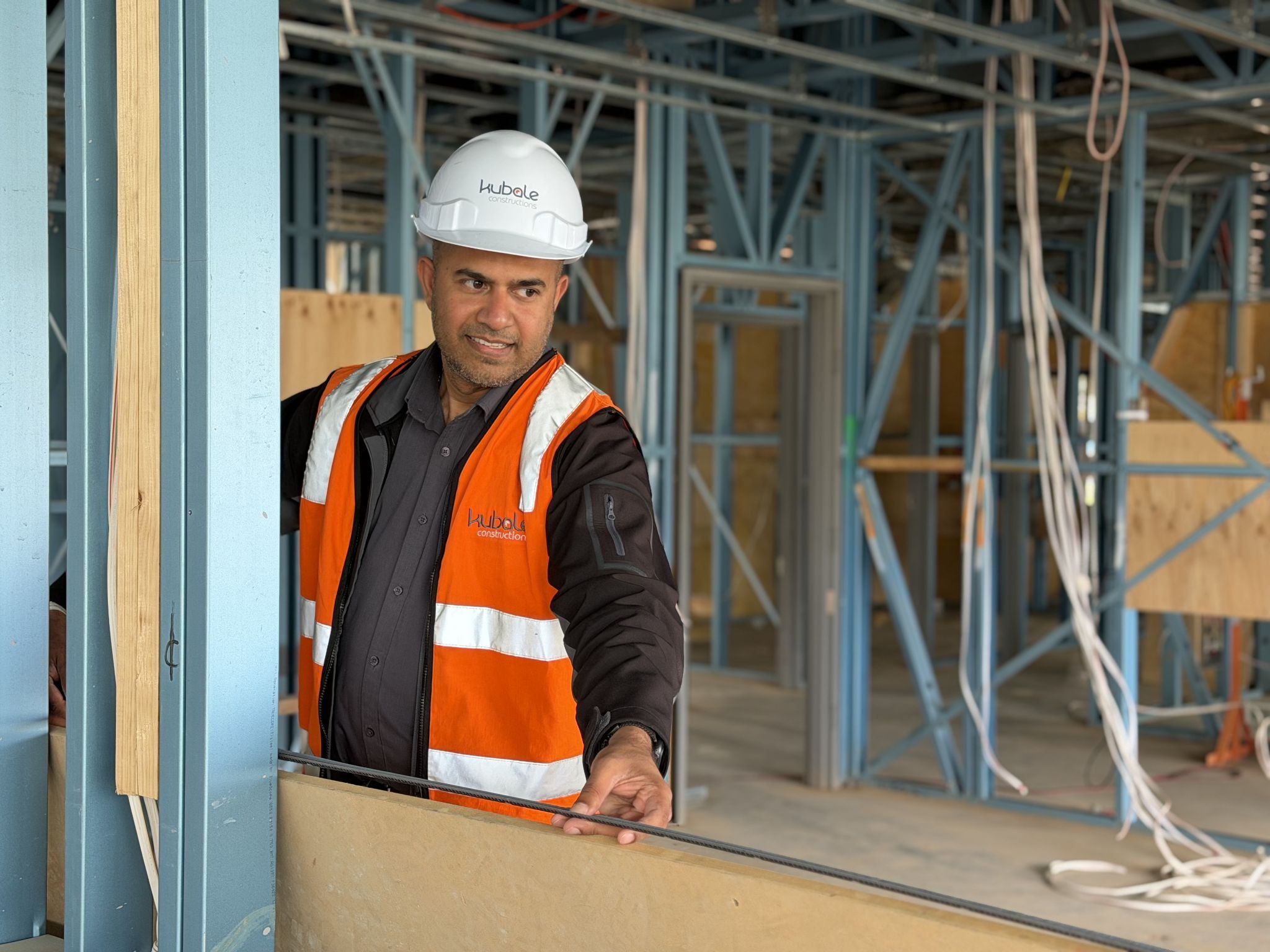
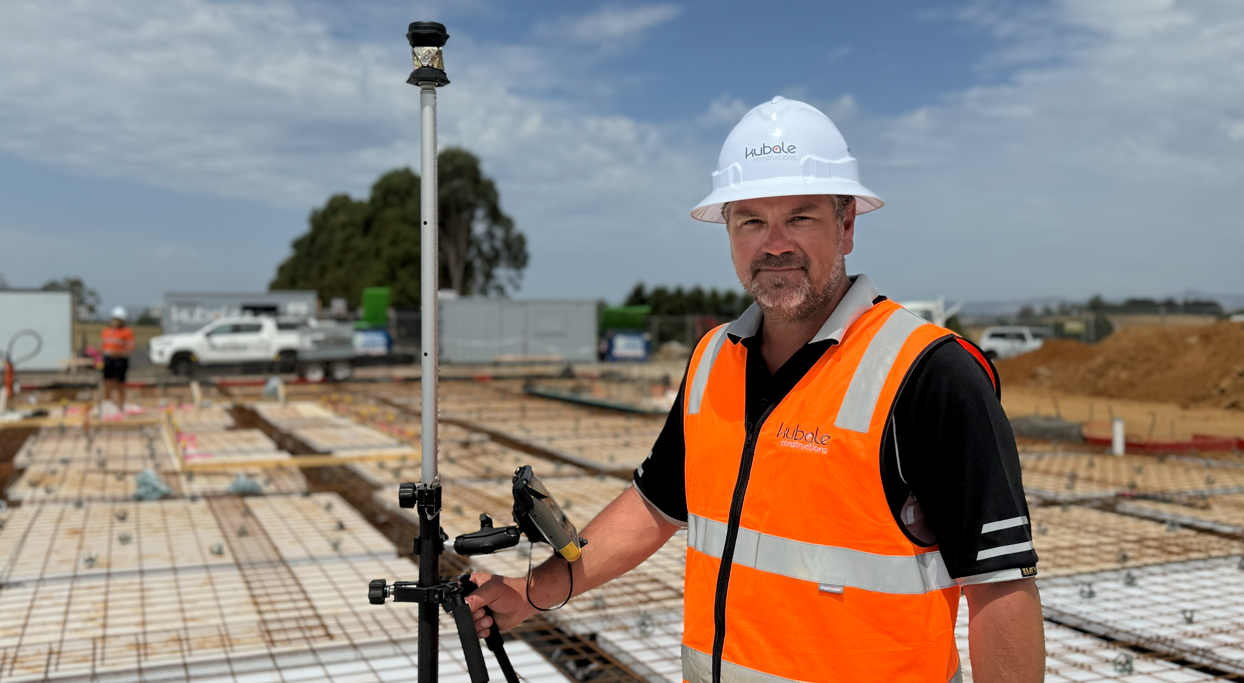
A construction company’s reputation is ultimately a reflection of its people. The Project Manager, the Site Foreman, and the Estimator assigned to your job will determine your experience far more than any marketing material or ISO accreditation.
It is vital to meet the actual team who will be running your site, not just the Business Development Manager who sells the vision. A builder whose senior team has worked together for a decade or more represents a level of institutional knowledge that is invaluable. Experience accumulates over time, and you want a team that has solved the hard problems before, not one that is going to learn how to solve them on your budget.
The Kubale team page is a good example of a builder that actually puts their people front and centre … names, faces, roles, facts. That's not just marketing, that’s our reputation.
Licensing, Insurance, Compliance … Don't Skip This Bit
While discussing insurance and licensing may not be the most engaging part of the planning process, neglecting this stage exposes your organisation to significant risk. Every commercial construction company operating in Australia must hold the appropriate contractor's licence for the specific state in which they are working. In Victoria, this is a Commercial Builder's licence issued by the Victorian Building Authority (VBA); in Queensland, it is governed by the QBCC.
Beyond licensing, you must verify:
- Public Liability Insurance: Typically $20M minimum for commercial projects.
- Workers' Compensation: Non-negotiable for site safety.
- Contract Works Insurance: Covers the build itself if something goes wrong.
If a builder cannot produce these documents promptly, it is a clear signal to walk away. Any legitimate construction company maintains current, accessible documentation to provide their clients with total peace of mind.
For a useful starting point on contractor compliance, the Master Builders Australia website outlines what's expected at a national level.
Understand Their Subcontractor Relationships
A head contractor is only as strong as the trades they employ. On most projects, a significant portion of the work, from HVAC and plumbing to structural steel, is performed by subcontractors.
A high-quality builder maintains long-term, high-trust relationships with their trades rather than scrambling to find the cheapest available labour when a project begins. This is particularly crucial in regional areas like Gippsland or Southeast Queensland, where local proximity and long-standing reputations ensure that the best trades show up on time and adhere to the expected standard.
Ask your shortlisted builders: "How long have you worked with your key subcontractors?" A vague answer here is a significant red flag.
Fixed-Price vs. Cost-Plus: Know What You're Signing
This one catches people off guard more than almost anything else.
A fixed-price contract gives you cost certainty upfront because the builder commits to the agreed scope within the price quoted. Cost-plus contracts have the client paying actual costs plus a margin, which can be appropriate for complex or uncertain scopes but leaves you exposed if the project grows in complexity.
Neither is simply ‘better’. It depends on how well-defined your project scope is, and how much risk you're comfortable carrying.
What matters is that you understand which contract structure you're entering into, what's in scope, and critically, what triggers a variation. Commercial contractors vary significantly in how they handle this. A builder who's transparent upfront about what will and won't generate additional cost is doing you a genuine service, even if it's not what you want to hear. Kubale Constructions offer its clients both budgeting and full quantity surveying services which can assist in defining the costs, and identifying cost saving opportunities. We can also manage complex design and construct projects because we employ both design and engineering professionals.
Don't Treat Price as the Decision
Competitive pricing is important, but a project delivered late with poor communication will always cost more than one delivered by a slightly more expensive, organised builder.
If one tender is significantly cheaper than the rest, it is rarely because that builder has found a "secret" efficiency. More often, it reflects stealthy exclusions, mistakes in the take-off, or a contractor in financial trouble looking for cash flow. At Kubale, we vet our own subcontractor quotes with this same scrutiny … because experience has shown us that the cheapest price at the start rarely remains the cheapest price at the finish.
Frequently Asked Questions
How do I verify a commercial construction company's licence in Australia?
Licensing is managed at the state level. In Victoria, you can check the Victorian Building Authority register. In Queensland, the QBCC has a public licence search. Simply enter the company name or ABN and confirm their licence is current and covers the project type.
What should I ask for when checking references for a commercial builder?
Ask past clients specifically about budget management (were there unexpected variations?), communication during the project, how the builder handled problems when they arose, and whether they'd use them again. That last question is the most revealing.
How long does a typical commercial construction project take in Australia?
It varies significantly by project size, complexity, and location. A straightforward fit-out might be completed in 8–12 weeks. A new multi-storey commercial building could take 18–36 months. Any builder who gives you a confident timeline without thoroughly understanding your scope should be treated with scepticism.
What's the difference between a commercial builder and a commercial contractor?
In practice, the terms are often used interchangeably. Technically, a builder typically takes on head contractor responsibility, managing the whole project, including subs, while a contractor might refer more narrowly to trade-specific work. When you're procuring for a full commercial build, you're almost always looking for a head contractor who holds a commercial builder's licence.
Do commercial construction companies in Australia handle council approvals?
Many do, or can coordinate the process on your behalf. This is worth clarifying early. Some builders include this as part of their service; others treat it as a separate engagement. Make sure your contract is clear on who's responsible for planning permits, building permits, and any necessary sign-offs.
Ready to Talk to a Builder Who Does Things Differently?
Choosing the right commercial construction company isn't a single decision … it's a process. Take the time to do it properly and you'll avoid the headaches that plague so many commercial builds.
If you're early in that process, or you already know what you need and want to talk to a builder with 26 years of proven delivery across Victoria and Queensland, get in touch with the Kubale team. No hard sell. No vague promises. Just a straight conversation about what your project needs and whether we're the right fit for it.
Contact the Kubale team today to discuss your project, or explore our past work to see the standards we hold ourselves to.