
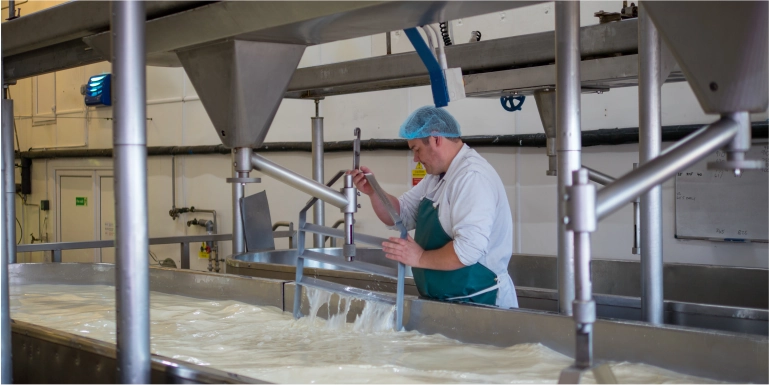
When a food processing facility can't stop operating, construction projects must fit within the needs of the facility operations. That's the reality of working with Fonterra at their Darnum facility in Victoria, and it's shaped how we approach every industrial engagement we take on.
Our relationship with Fonterra spans more than two decades. In that time, we've delivered everything from urgent call-out works to larger contracted projects, all within a live operating environment that leaves little room for disruption. It's the kind of ongoing industrial construction work that tests a builder's systems, discipline, and technical depth in ways a one-off project simply doesn't.
The Challenge: Construction Inside a Working Facility
Food processing facilities don't normally have significant downtime built into the schedule. Fonterra's Darnum site runs almost continuously, which means any construction or maintenance work we carry out has to be planned and sequenced around their operations, not the other way around.
This is the core challenge of live-site construction: the site is never yours. You're working within someone else's production rhythm, safety framework, and administrative requirements. Getting that wrong doesn't just cause delays, it can interrupt supply chains, compromise product integrity, or create serious safety incidents.
From the outset of our relationship with Fonterra, we've had to conform to their live operating environment and their administrative requirements. That means understanding their workflows, aligning our crew scheduling to their operational windows, and being genuinely flexible in how we structure our engagements.
Flexible Engagement, Consistent Delivery
Not every industrial client has a pipeline of neatly packaged contracts ready to go. Fonterra's needs have varied considerably over the years; some works have been delivered under an hourly-rate-plus-expenses arrangement, others as larger contracted scopes.
Being able to move between those models without losing quality or coordination is something a generalist builder typically isn't set up to do. It requires trust on both sides, and trust comes from consistent performance over time. When Fonterra needs something done urgently, they call us because they know we'll be on site, compliant, and competent.
We're also available on-call for urgent or time-sensitive works. In an industrial setting, that matters. Equipment fails. Structural issues emerge. When a facility is running around the clock, the ability to mobilise quickly isn't a nice-to-have; it's a basic requirement.
Specialist Conditions Require Specialist Crews
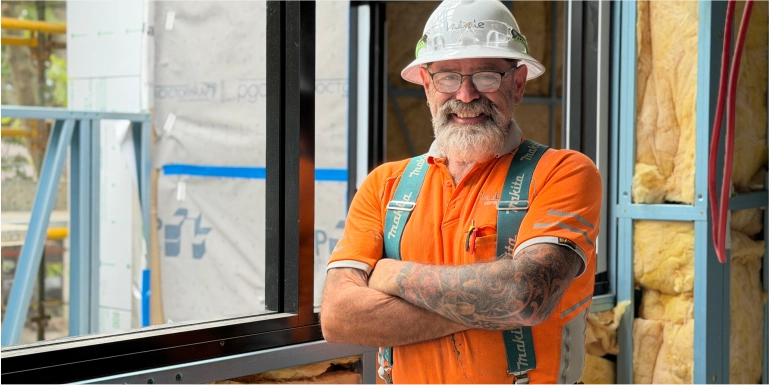
Working inside a food processing facility isn't like working on an open commercial build. Our crews have required upskilling for the specialist conditions that come with Fonterra's environment: confined spaces, hot working conditions, and emergency response protocols.
This is where the distinction between a specialist industrial construction company and a general builder becomes evident. Sending an unprepared crew into a confined space inside a live industrial facility is a compliance failure and a safety risk. Our people are trained for these environments. That training doesn't happen overnight, and it's not something you can paper over with a site induction.
The construction techniques and conditions specific to this industry require builders who understand the regulatory requirements, the physical hazards, and the operational sensitivities of the facilities they're working in.

Why the Right Partner Matters
Industrial clients sometimes approach construction procurement the same way they'd approach a commercial office fit-out; on price, with a broad tender field. That approach carries real risk when the project is inside a live facility with complex operational constraints.
The value of working with experienced commercial and industrial builders isn't just technical. It's the systems behind the work: how we plan access, how we sequence tasks around production schedules, how we manage safety documentation, and how we maintain communication with the client's operations team throughout.
Cold storage construction, food-grade facilities, and other specialist industrial environments sit in a category of their own. The compliance requirements are significant, and the consequences of getting it wrong extend well beyond the build itself.
Our relationship with Fonterra is now central to how we operate. It's built on 20 years of delivering on what we've committed to, under difficult conditions, on short timelines, inside a facility that rarely stops.
If you're managing a similar facility and need a builder who can work within your operational reality, we'd welcome the conversation.

Frequently Asked Questions
Can you work within a live industrial facility without disrupting operations?
Yes. We've done this for over 20 years at Fonterra's Darnum facility. It requires detailed planning, flexible scheduling, and close coordination with the client's operations team. We structure our work around production, not the other way around.
What types of engagement structures do you offer for industrial maintenance and construction?
We work under both hourly-rate-plus-expenses arrangements and larger contracted scopes, depending on what suits the client's needs. We're set up to move between those models without compromising on quality or coordination.
Are your crews trained for confined space and specialist industrial environments?
Yes. We've upskilled our crews for the specific conditions found in facilities like Fonterra's — including confined spaces, hot working environments, and emergency response requirements. This is industry-specific training, not standard site induction.
Do you offer on-call availability for urgent industrial works?
We do. For clients with live facilities, the ability to mobilise quickly for urgent or time-sensitive works is a practical necessity. We can maintain on-call availability for clients with whom we have an established relationship and agreement.
Why use a specialist industrial construction company rather than a generalist builder?
Generalist builders aren't typically set up for the compliance requirements, safety protocols, and operational sensitivities of live industrial facilities. Specialist experience means fewer surprises, lower risk, and a contractor who understands the environment they're working in before they arrive on site.