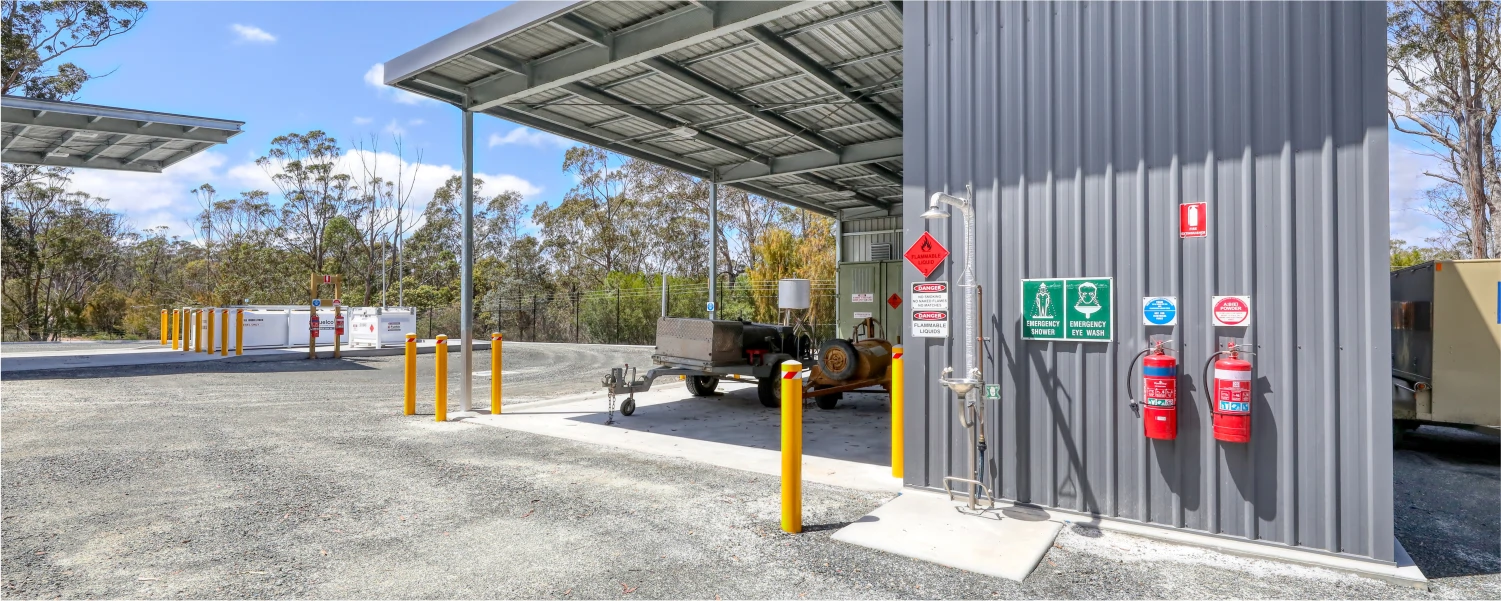
Industrial construction in Queensland is a different proposition to what many project owners expect coming from other states or from commercial backgrounds. The climate is specific, the regulatory framework is Queensland's own, the distances are significant, and the types of facilities being built, whether a warehouse, a processing facility, a maintenance depot, or a purpose-built industrial shed, each carry their own complexity.
This guide is for project owners, facilities managers, and businesses planning an industrial build in Queensland. It covers what makes industrial construction in Queensland distinctive, what to look for in a builder, and how to set your project up for a result you are actually satisfied with.
What makes industrial construction different?
Industrial construction sits in its own category. The builds are typically larger, the structural requirements are more demanding, the services and trades involved are more specialist, and the operational constraints are more complex than a standard commercial build.
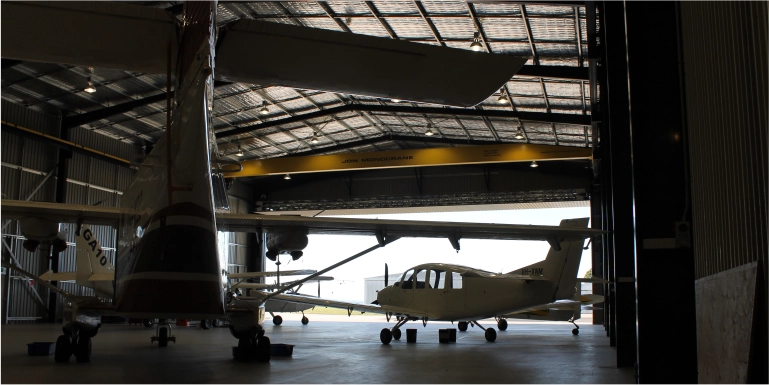
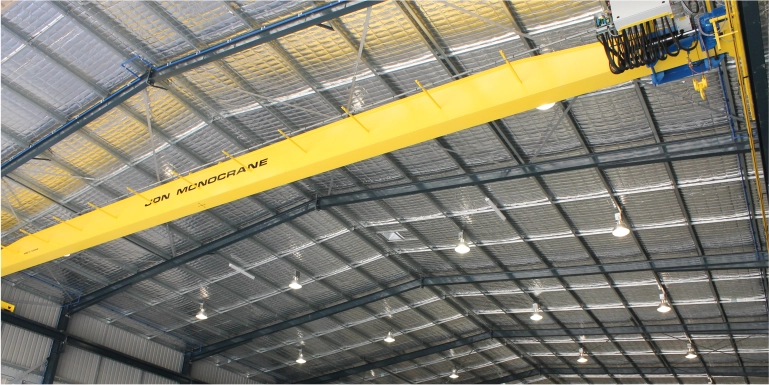
A warehouse that will house forklifts, pallet racking, and logistics operations needs to be designed with slab loadings, clearance heights, dock leveller positions, and vehicle turning circles treated as genuine engineering considerations, not afterthoughts. A factory that will run machinery with vibration loads needs foundations engineered for that purpose. An aviation hangar with a 23-metre gantry crane, as we built for Gipps Aero at Latrobe Regional Airport, requires a clear-span structural design that leaves no room for estimation errors.
This is the fundamental difference between industrial and commercial construction: the tolerance for imprecision is lower, and the consequences of getting it wrong show up in the building's operational life, not just at practical completion.
The Queensland Context
For project owners in Queensland, there are several considerations specific to operating in this state.
The first is licensing. Any builder working on commercial or industrial projects in Queensland must hold a current QBCC licence. This is not optional and is not interchangeable with licences issued in other states. Our Queensland licence number is QBCC 15529867. Before engaging any builder for industrial work in Queensland, verify their licence status directly on the QBCC website.
The second is climate. South East Queensland conditions place specific demands on industrial buildings. Roof and wall cladding systems need to be selected for local wind ratings. Concrete slabs in high-humidity environments require careful detailing. If the facility will house temperature-sensitive goods or processes, the building envelope needs to account for solar loading in ways that are less critical in Victoria or New South Wales.
The third is local subcontractor relationships. A builder who has delivered industrial projects in Queensland and maintains relationships with local trades will deliver a materially different result to one who arrives from interstate with no established supplier base. Trades show up reliably when there is an existing relationship and mutual trust.

What Types of Industrial Projects do We Build?
Industrial construction covers a wide range of facility types. Some of the project types we regularly deliver include:
Maintenance depots and operational facilities for government and infrastructure clients. We have delivered multiple depot facilities for clients including DEWLP across East Gippsland and V-Line in Warragul, each requiring careful coordination with the client's operational requirements.
Warehouses and storage facilities, including climate-controlled and coolroom environments. Our long-term relationship with Fonterra at their Darnum facility has involved cold storage construction inside a live processing plant, requiring specialist understanding of vapour barriers, thermal detailing, and live-site safety protocols.
Aviation and specialist high-clearance structures. The Gipps Aero hangar we constructed is 52 metres wide and 25 metres deep, with a 23-metre gantry crane installed internally. This type of clear-span structure demands a builder who understands structural steelwork, roof drainage design, and crane rail installation from the outset.
Industrial fit-outs and facility upgrades for existing sites, often while the facility remains in full operation.
How to Set Your Project up for Success
The decisions you make in the early stages of an industrial project, well before a tender goes out, have a disproportionate impact on the outcome.
Scope definition is the first. The more clearly you can describe what the building needs to do operationally, the more accurately a builder can price and plan the work. Builders who are brought in at the concept stage can contribute genuine value to the design. Builders who receive a complete set of drawings to price have less ability to influence the outcome.
Contractor selection is the second. For industrial projects above a certain scale and complexity, the lowest tender price is rarely the right price. The right price is the one that reflects the actual cost of building the project properly, with qualified trades, engineered solutions, and realistic contingency for the things that emerge on complex sites.
Delivery model is the third. Design and construct arrangements work well for industrial projects where the brief is functional and the builder has genuine design capability. Construction management suits more complex or time-sensitive programmes. Traditional construct-only suits owners who have a strong design team and want competitive tension on the construction cost. We work across all of these models depending on what suits the client.
Frequently Asked Questions
What licences does an industrial builder need to work in Queensland?
In Queensland, all commercial and industrial construction work requires a current QBCC licence. The specific class depends on the value of the work and the type of construction. Any reputable builder will provide their QBCC licence number for direct verification.
Can you build industrial facilities across both Victoria and Queensland?
Yes. We are licensed and operational in both states, with offices in Warragul, Victoria, and Caloundra West, Queensland. We deliver industrial projects across both states and maintain established subcontractor networks in each region.
What is the difference between industrial and commercial construction?
Industrial construction typically involves larger structures, heavier structural requirements, more specialist services, and buildings designed to support operational processes rather than people-centric uses. The tolerance for imprecision is lower because errors show up in the building's operational life over many years.
How long does an industrial construction project take?
Timelines vary significantly by project type and scale. A straightforward industrial shed of 500 square metres may be delivered in 12 to 16 weeks from the issue of permits. A purpose-built processing facility or large clear-span structure is typically a 6 to 18-month programme, depending on design complexity, approval timeframes, and site conditions.
Do you handle council approvals and building permits for industrial projects?
We can manage this on behalf of our clients or coordinate the process with their existing consultants. It is important to clarify this at the outset and ensure it is clearly documented in the contract scope.
Partner with a Team of Industrial Construction Experts
Building a great school facility takes more than just structural engineering; it requires a partner who respects the daily rhythm of your campus, values clear communication, and cares about the local community.
At Kubale Constructions, we combine our commercial project management expertise with an honest, down-to-earth approach to deliver functional, high-quality learning environments across Victoria and Queensland.
Planning an upcoming industrial build? If you are planning an industrial project in Queensland and want to talk to a builder who understands the local context, we would welcome the conversation. Explore our industrial construction services, or
contact the Kubale team to discuss your project directly.